


Our story so far...
Sorcha & Finn, the students/siblings behind the start-up Medjuica, tell us a bit about how it all began…
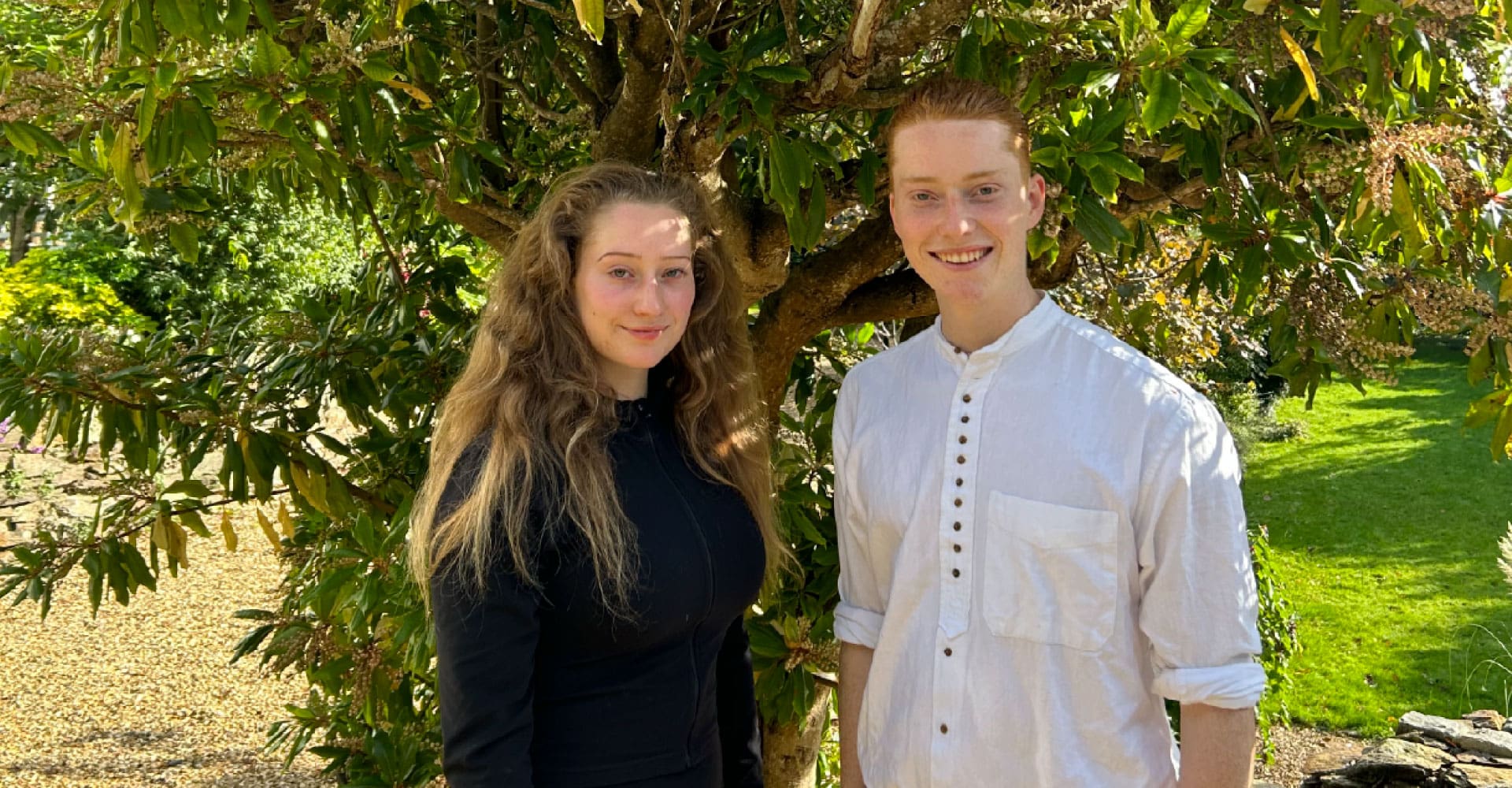
Finn: The concept of Medjuica was ignited by our love of food. We were lucky to have lived in France and Spain as children and to experience how important in their cultures it is to sit down as a family and enjoy quality food. We grew up eating healthy organic foods and we feel that informed our decision to try and bring healthy organic snacks to the consumer. We were made very aware from a young age that healthy eating made for happy children, and we learned from our mother that while some foods harm, other foods heal. Bookshelves in our home were filled with reference books on the science of eating healthily. Our Mum made organic green smoothies long before they became popular. As young adults, we became conscious of the paucity of healthy snacks available in shops, theatres and cinemas and how the ultra-processed food industry was so powerful yet they had carte blanche to produce food that were bad for your body and your headspace!
If you pour petrol into the tank of a diesel car, it won’t take long for the car to break down, yet people often fuel their bodies with handy but harmful snacks. My sister Sorcha and I decided to harness our knowledge, using scientific studies from respected journals, to curate nutritious ambient snacks in calorie-controlled single-serving portions in one box, making it easy for people to eat the correct daily portion of healthy foods while on-the-go.
The box contents can be consumed over 2 to 7 days, or you can buy the individual products in minimum quantities of 15. If you’re committed to health goals, having supplies readily available to grab-and-go will make achieving your mission easier. We’d also like to see Medjuica in vending machines in hospitals. Medical people often eat junk food, especially on night duty, yet they’re expected to perform life-saving work, so we wanted to offer healthy snack options. Likewise, patients would benefit from strengthening their immunity with Medjuica snacks. Often, they are gifted chocolates as a ‘treat’ by visitors, yet science has shown these sugary snacks affect the gut microbiome, which can affect immunity and the speed of recovery.
Sorcha:
Medjuica was born out of frustration at the dire choices we face when buying snacks. You go to a cinema or theatre, and what’s on offer are empty calories wrapped in fancy packaging. I find it a pain having to check the ingredients on every snack I purchase. The brilliant App called ‘YUKA’ really helps me make informed choices. Recently, I scanned a can of Coca-Cola using it, and it gave it a 0 out of 100; you’d consume 140 calories for ZERO nutritional gain. As the idea of Medjuica evolved, we curated a box we call the ‘Trinity Health Box’ because it benefits the gut, the heart and the brain. We hope to bring out more options for more specific health issues, and we also want to develop Medjuica’s own-brand of organic nuts in single servings. I’ve just finished my degree in French and Business at university. Medjuica represents a long-held ambition to offer people tasty, healthy snack alternatives that are life-enhancing.
Q: How did you decide on the contents for the Healthy Trinity box?
Finn: I started intense research on scientific evidence-based studies to find nutrient-rich foods that improved overall health because I wanted to strengthen my immune system. Following two years of consultation and reading, the answers were the same over and over again. Apart from the obvious fruit, vegetables, meat and legumes, the superfoods are distilled down to nuts, seeds, dark chocolate, olive oil, olives, and green tea.
Sorcha: Sourcing organic raw chocolate with no emulsifiers or refined sugar proved a serious challenge (our 94% cacao is minimally sweetened with dates). You can get a therapeutic effect from just 20g which is half a bar. Flavonols act as antioxidants, which fight free radicals, the baddies that cause inflammation and chronic disease.
There’s significant food fraud in supermarkets, which led us to source an Organic Extra Virgin Olive Oil (EVOO) supplier that produced one of the highest polyphenols of any cold-pressed oil from a mono-varietal olive grove. The mini 10ml bottles provide a powerful therapeutic effect, you’d have to ingest up to half a litre of other EVOO to match the polyphenols in our 10ml bottle, which has 2 x 5ml teaspoons, one is a daily dose. It’s very easy to overdo the calories in extra virgin olive oil, our 10ml has 80 calories so 40 calories a day as it contains 2 x teaspoons. EVOO is one of the most important components of the Mediterranean diet. Likewise, sourcing a 30g packet of organic olives was not easy, but we persevered and eventually found a wonderful supplier in Greece.
Q: What do you mean by ‘food as medicine’?
Finn: Firstly, we‘ve been told we can’t use that term! But it’s perfectly ok for UPF companies to make false health claims for products containing bad ingredients. To answer the question, we all know we would die without food or water. Equally, if we tried living on vitamin supplements alone, we’d die within weeks. On average, we ingest 2,000 calories a day; Mejuica offers the opportunity to ensure each daily mouthful matters and is nutritionally dense.
We want to see consumers swap out crisps for Medjuica’s organic olives. Crisp companies advertise their product as ‘perfect for snacking’. A 25g bag of say, Tayto Cheese & Onion flavour, provides approximately 133 calories. Ingredients include: Potatoes, vegetable oils (sunflower oil and/or rapeseed oil), and cheese & onion flavouring. The flavouring typically contains onion powder, yeast powder, cheese powder, monosodium glutamate (E621) as a flavour enhancer, wheat flour and salt.. One packet contains just a trace of vitamins and minerals; the Vitamin C is destroyed in the frying. The MSG provides the ‘umami’ effect so you want more. Consuming crisps eats into our daily calorie allowance, while providing only a trace of nutrients, while containing ingredients which are known gut-disruptors. Yet half a million packets of Tayto crisps are sold in Ireland every day and six billion packets of crisps are consumed annually in the UK; figures that are increasing year-on-year. We’re never going to win the popularity contest, but through education, we hope to make people aware that their choice directly affects their health and the earlier you start, the better the outcome in later years.
Our 30g serving of the organic Kalamata & green olives contains 60 calories per pack. The ingredients include organic mixed pitted olives (kalamata & green), salt, trace of organic vinegar, organic extra virgin olive oil and citric acid (which occurs naturally in citric fruit). Due to their high polyphenols and antioxidants, as well as containing monounsaturated fats and fibre, these olives can help lower bad LDL, raise good cholesterol and are heart-healthy. Vitamins include A, C, B, E, and K, and Minerals: iron, calcium, magnesium, phosphorus, and potassium.
Sorcha: The UPF snack industry – like its victims – is growing exponentially. Do you want to ingest 133 empty calories or 60 nutritional calories? Of course, organic olives are more expensive than a packet of crisps, but one is helping your health and the other is hindering it. What price are you prepared to pay to stay healthy? The price for the consumption of ultra-processed food ultimately falls on the taxpayer, who bankrolls a health service that treats the metabolic syndrome UPF cause. Of course, we can’t be good ALL of the time. The 80%-20% in favour of good food is a ratio to aim for.
Q: Why is everything organic?
Finn: We are passionate about using organic products. The weedkiller Roundup. whose active ingredient is Glyphosate, a known carcinogen, is permitted for use by farmers in the EU. We are ingesting potentially cancer-causing chemicals from fruit and vegetables sprayed with this herbicide. Add to that, chemicals found in plastics or antibiotics in animal products and you get a cocktail of poisons. These have a cumulative effect in our bodies. In Europe, Glyphosate represents one-third of all herbicides used on crops. Even the humble non-organic wax-covered lemons in supermarkets contain chemicals such as imazalil, pryipoxyfen, pryidaben and chlorpyrifos. Tests commissioned by the Environmental Working Group (EWG) in 2020 found the Neurotoxic fungicide ‘imazalil’ on nearly 90% of non-organic citrus fruit samples, including lemons.
Eurostat figures show that in 2022, Ireland had only a 5% share of organic land; in France, it’s over 10%, in Spain it’s 12% and in Italy it’s almost 20%. Austria leads with 27.3% of its agricultural land under organic cultivation. Ireland still has one of the lowest organic farming rates in the EU. The use of chemicals are also killing the bee population. Bees pollinate about 70% of the crops that feed 90% of the world. Who said the human race was an intelligent species when we kill the very thing that keeps us alive?
Sorcha: ‘Forever chemicals’ are something we should be very concerned about because they don’t break down. They’re in everyday household products and plastics. They cause immunotoxicity, high cholesterol, liver disease, kidney disease, infertility, fetal complications, colon and testicular cancer, and thyroid disease. Headlines in newspapers ask why bowel/colon and other cancers in younger people are on the increase. A deep dive is overdue into the rise in UPF and chemicals in foods in the supply chain and into contaminated water used by livestock, which is leeched into rivers and seas affecting marine life. It’s no surprise to learn that microplastics have been found in heart and brain tissue. Forty different studies found the presence of toxic ‘forever chemicals’ in umbilical cord blood. Forever chemicals such as phthalates, are in almost everything plastic, so it is wise to buy liquid products in glass and not plastic. Every time you squeeze a plastic bottle, you are releasing these chemicals. They are in lipstick, nail varnish, perfume – there’s no escaping them. But knowledge is power. We, the consumers, can vote with our purses. Ask yourself if a product is contributing to the destruction of the planet. It’s amazing how much stuff we don’t need that is made from chemicals that end up polluting our rivers and seas and which come back through the food chain to make us chronically ill. Clothing for disposing’ after a few wears is another contributor to environmental catastrophe. Fast fashion waste is a major pollutant. Polyester, nylon, and acrylic shed microplastics when washed, which in turn enter our soil, rivers and oceans. In an bad-boy boomerang effect, they come back to say hello again, through our food chain. You basically eat what you and others wear.
Q: How does the Trinity health box help mental health?
Finn: The Trinity health box offers ambient snacks scientifically proven to help with mood, anxiety or mild depression and are excellent for the heart and gut. The fibre-rich snacks will assist the gut in producing a healthy microbiome, which in turn helps release serotonin – the happy hormone that transfers to the brain. The gut-brain axis is vital to overall mental and physical well-being.
Sorcha: During the lockdown, many people suffered mental health issues. I and many of my friends became more anxious. My Mum made sure to feed me organic foods that were scientifically-proven to help overcome negative feelings, specifically mood-boosting foods. That began with probiotic and prebiotic gut foods because 90–95% of the body’s total serotonin is found in the gut. Other examples of good mood food contain tryptophan such as chicken and turkey. Tryptophan is an essential amino acid which can help produce serotonin, the happy chemical. Tryptophan needs carbohydrates to be able to reach the brain. If you’re vegan or vegetarian, Sunflower seeds, peanuts and pumpkin seeds also contain tryptophan. The human body cannot synthesise tryptophan, so it must be obtained through dietary sources
Q: What do you hope to achieve with Medjuica?
Finn: We want people to be aware of the choices they make. We tend to eat snacks mindlessly, but if you’re presented with these carefully selected ingredients, at least you know you’ve strengthened your immune system and nourished your gut, mind and heart.
Sorcha: I think the government needs to get more involved in the general health of our nation. Living in France and Spain, if you walk into a supermarket in those countries, it’s wall to wall with healthy options like nuts, seeds, olives, legumes, wild tinned fish, sardines, and olive oil. No wonder Spain is the top in Europe for longevity. You walk into a typical Irish supermarket and immediately run the gauntlet of ultra-processed foods such as cakes and biscuits. Why can’t we connect the dots? We might be living longer, but our quality of life is deteriorating.
I get particularly incensed about the new 2.24 billion Children’s Hospital featuring a Ronald McDonald house. What’s next? Tobacco companies sponsoring lung wings? The argument proffered is that they are providing accommodation for families of sick children; the reality is, it is mainly funded from the profits of a fast-food business that causes obesity and chronic metabolic syndrome. We are left with a revolving door of chronic ill-health. It’s a prime example of ‘health-washing’. We want to be part of a generation that disrupts the status quo and changes that lazy complacency that allows such anomalies.
We hope Medjuica goes some way to getting that health ball rolling and that it brings a modicum of honesty to the industry. We feel we are on the cusp of a zeitgeist that will see pushback against ultra-processed food companies. That in turn will benefit society in general and government coffers in particular, as less money will be needed to treat the fallout from the consumption of these foods.
We have loads of ideas that require deep pockets and further investment so if you’re interested, please talk to us, and let’s work collectively on making these goals happen!